Learning how to water trees properly can mean the difference between a thriving landscape and one that struggles in dry or extreme weather. Whether you’re wondering how do you water a tree, how often to water, or the best tools for the job, this guide covers everything you need to keep both young and mature trees hydrated year-round.
The assumption that rain will provide the necessary irrigation needs for your trees to survive and thrive is false. As a homeowner or business owner, watering your trees can change the longevity of your tree when climatic conditions such as droughts, or wet seasons come about.
This Wisconsin summer has varied from being a typical midwestern summer to experiencing heatwaves, to supplying copious amounts of rain and thunderstorms, making it even more important to know exactly how to water trees in every situation. So, if you find yourself sitting on your cedar wood deck, admiring your tree-filled backyard while sipping on lemonade, look at your trees and run some tests to see if they have signs they need water. But to properly water your trees, and know the signs a tree needs watering, you need to understand the requirements, irrigation location, and irrigation rule of thumb.
Signs Your Tree Needs Water
While trees often show visible symptoms when they’re thirsty, the best way to know for sure is to regularly check soil moisture. A simple check can help you decide if it’s time for watering trees and prevent both under- and overwatering.
Learn more about specific indicators and tests that can be done utilizing the soil. Check out our detailed guide on Signs Your Tree Needs Watering.
Requirements For Watering Newly Planted Trees
The watering needs of newly planted trees depend on the tree’s specific irrigation requirements. Watering newly planted tree’s requirements are based on the irrigation needs of the tree. Like us, trees evolve and grow over time, and so do their irrigation needs. The irrigation needs of a tree are based on age, the signs a tree needs watering, the time of year, and the weather conditions.
Varying Ages
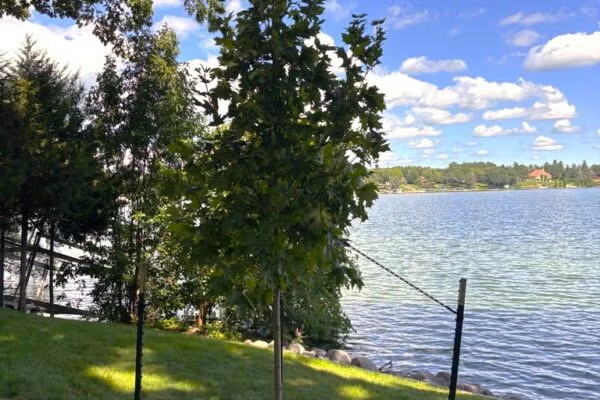
Newly planted trees are reliant on homeowners to properly irrigate in the root ball area. The root ball area is located directly below the trunk. Due to their lack of an extensive root system, watering newly planted trees should be done regularly for close to two years after the initial planting.
It is no surprise that mature trees have a developed root system. A developed root system is grown when a newly planted tree receives the irrigation and nutrients necessary to become established. However, once established, some tree species need added watering, and some do not. The best way to test if trees need added water is to push a screwdriver into the soil surrounding the trunk of the tree. If the screwdriver passes easily, the soil is still moist. If it takes a little bit for the screwdriver, the soil is dry and it is a sign a tree needs watering.
A few common Wisconsin trees that need extra watering if there is less than 1 inch of water per week are Birches, Spruces, any stressed trees, and watering newly planted trees.
Time of Year
Summer is the hottest and driest time of the year, at least that’s what people who aren’t from Wisconsin say. At the beginning of the summer season, trees store the moisture they acquired over the winter. Later in the summer, you will find this moisture has been expended, resulting in the need for watering newly planted trees. Expended moisture, as stated above, is indicated by using a screwdriver around the trunk of the tree.
Weather Conditions
When experiencing a drought, the acquired moisture stored in the soil is used up almost instantaneously. This makes the need for continual irrigation increase in tree species that would normally thrive without continual irrigation. Newly planted trees should be watered weekly and deeply with 5 to 15 gallons. Mature trees can be watered monthly if water retention reaches 8 to 12 inches.
Years producing high rainfall are known as wet years. These years require very little to no extra irrigation. Copious amounts of rainfall generally require irrigation in early or late summer, which is tested by poking in the ground with a screwdriver.
Irrigation Location
Mature and new trees can both achieve their irrigation needs through varying types of tree watering applications. These water applications can include sprinklers, drip irrigation, bucket dumping, and a simple hose.
As stated before, watering newly planted trees is tricky due to the root ball area being more susceptible to drying out due to their lack of an extensive root system. To combat against dry out, regularly irrigating the root ball area, located directly below the trunk, and checking moisture sustainability is suggested for the first month or two. A new tree’s “regular” water pattern should occur weekly, depending on the moisture sustained from the last irrigation regimen.
Mature trees have a developed root system that expands far beyond the canopy of the tree. The canopy is described as the upper layer of the tree or the section with leaf growth. The outer sections of the canopy, or leaf area, is known as the dripline. Between the outer half of the canopy and the dripline is where irrigation is suggested. This is to ensure all roots that extend beyond the canopy are accounted for. Most tree roots are in the upper 12 to 18 inches of the soil, which means this should be the target area when irrigating a tree. A sprinkler works best for mature tree watering.
Irrigation Rule of (Green) Thumb For Watering Trees
Hose
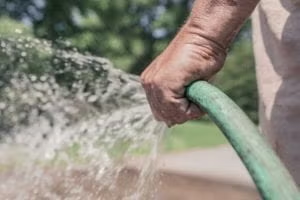
Hoses make the job of watering a tree easy; so, after your long day of work, grab that hose and give your tree a drink! A convenient practice is turning the hose to a slow dribble and place, depending on the age of the tree, within proximity of the trunk, or within the dripline, for thirty minutes, and rotating to ensure every part of the tree is watered.
If the tree is mature, this process will range anywhere from 2 to 3 hours. This process is longer because moving the hose farther and farther out into the dripline is suggested to ensure the extensive root system is accounted for.
Soaker Hose
A soaker hose allows for small beads of water to escape to the extent that the hose is turned on for. Wrapping the hose around the trunk in the shape of a swirl is suggested for equal irrigation. This process should take an hour or more depending on the tree and moisture retention.
Sprinkler
If a sprinkler is the irrigation method of choice, the water pressure should be turned down to ensure the leaves are not being hit, as the irrigation process does occur below the tree itself.
Bucket
If you do not have a hose, soaker hose, or sprinkler, a bucket is a perfect option. When using a bucket, it is important to ensure that run-off or pooling does not occur due to dumping too much water around the tree too quickly. If this does occur, allow the water to soak in, and begin again if you believe the water you dumped did not soak 12 to 18 inches deep in the soil.
Wachtel Tree Science uses preferred methods when providing tree and shrub planting services and offers science-based aftercare and tree care recommendations. However, having a basic understanding of the irrigation process is always recommended to ensure your backyard, lemonade sipping experience is filled with rejuvenated trees.
Learn how we can help keep your trees healthy and beautiful with our comprehensive tree care services by contacting our experts today.
What a wonderful service you provide. It’s like my trees are smiling at me! Thank you!
Laurie L. – Twin Lakes, WI
Frequently Asked Questions
What is the best method for watering trees?
A sprinkler works best for mature tree watering while a hose set to a slow dribble and placed near the root ball area is recommended for newly planted trees.
How do you know when a tree needs water?
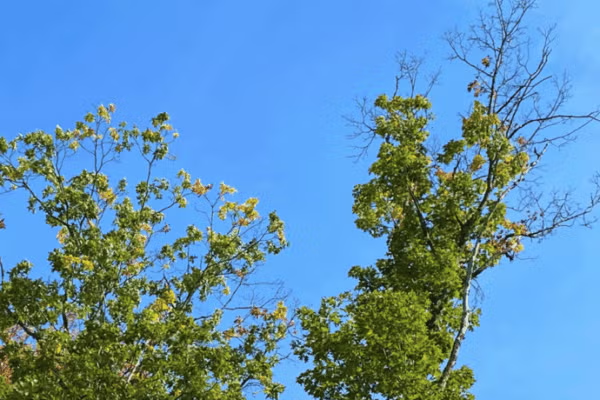
To tell when trees need watering, some signs to look for are curling or wilted leaves, leaf scorch, yellowing leaves, and early color transitioning.
Should I water trees in the morning or at night?
Watering trees in the morning is recommended for less evaporation, allowing more water to reach tree roots. Morning tree watering allows trees to absorb moisture all day and reduces the chance of prolonged leaf wetness that can encourage fungal diseases.